

You’ve found the franchise. You’ve read the prospectus twice and spoken to the franchisor, and you’ve probably pictured the van or the shop front more than once. Then you open a spreadsheet to work out how to pay for it, and the excitement goes quiet.
That’s normal. Very few people in the UK buy a franchise with savings alone. Most put in some of their own money and borrow the rest, usually from a bank, the Start Up Loans scheme or an equipment lender. The buyers who get funded aren’t always the ones with the deepest pockets. They tend to be the ones who know exactly what they need and how they’ll pay it back.
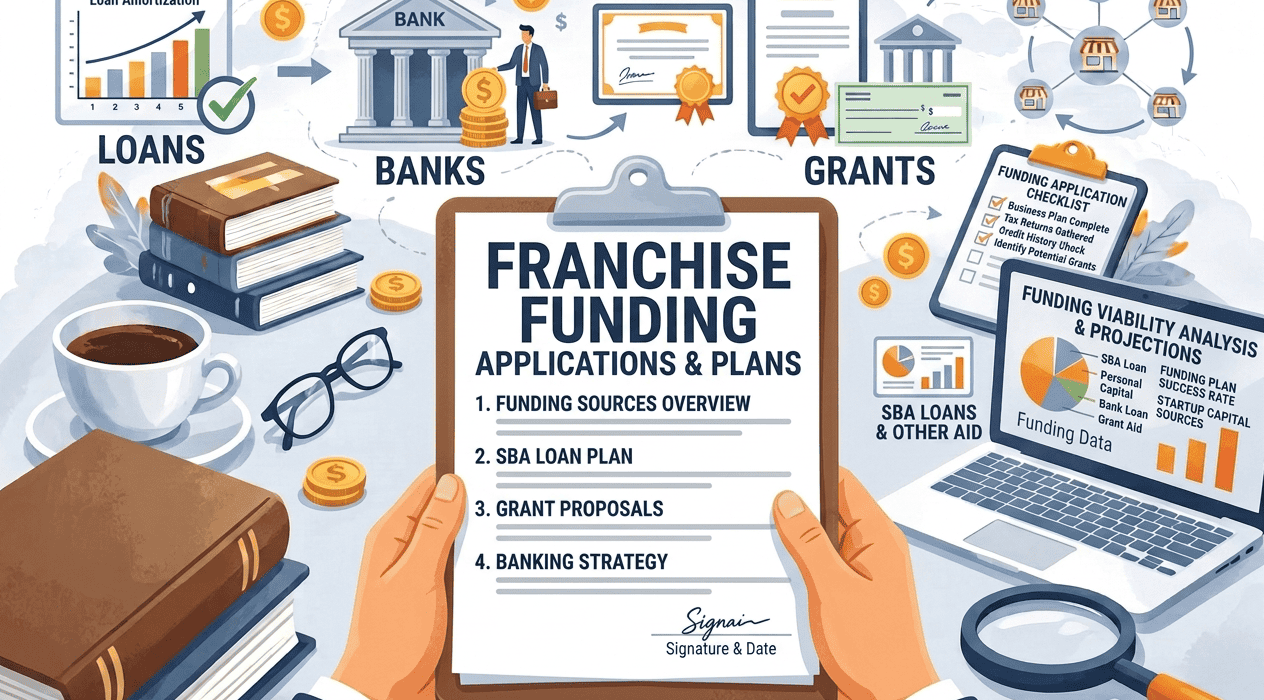
Below we cover how to fund a franchise purchase in the UK, including which routes work, which one is mostly myth, and what a lender wants to see before agreeing.
Start with the real number
The franchise fee in the prospectus is only part of what you’ll need to raise. Lenders know that. If you ask for the fee and nothing else, it suggests you haven’t done the sums.
Add everything up before you speak to anyone. That means the initial fee, the set-up costs (fit-out, vehicle, equipment, stock, signage, IT and launch marketing), fees for a franchise solicitor and an accountant, and working capital to cover the business and your own bills until it pays its way.
Working capital is where first-time buyers most often come up short. Ask the franchisor how long new franchisees usually take to break even, then make sure you’re funded well beyond that point. Plenty of franchisees who struggle in year one have a sound business. They’ve simply run out of cash in month five.
Most of these costs should be set out in the Franchise Information Memorandum (FIM). If they aren’t, ask the franchisor for a written breakdown. Our article What Does It Really Cost to Buy a Franchise in the UK? goes through each one.
Your own money comes first
Nearly every lender will expect you to put in some of your own money. How much depends on the lender, the franchise and your circumstances, so be wary of any figure you hear second-hand. The reasoning behind it doesn’t change, though. A lender wants you to have something to lose if the business fails, because people protecting their own money tend to work harder.
That contribution can come from savings, a redundancy payment, the sale of an asset or a gift from family. If family are helping, expect the lender to ask for a signed letter confirming it’s a gift. A loan dressed up as a gift is one more debt the business has to carry.
Some buyers look at releasing equity from their home or using a pension. Either can work. Both put something hard to replace at risk, so speak to an independent financial adviser first and think honestly about how you’d cope if things went badly.
High street banks with franchise teams
A bank loan usually makes up the largest share of the money. Barclays, NatWest and HSBC are among the UK banks with dedicated franchise teams. The people in them understand how franchising works, and they may already know the brand you’re looking at.
That helps more than most buyers realise. If a bank has lent to other franchisees in the same network and seen them repay, it already has evidence the model works. You’re asking it to back a proven system with you running it, which is a much easier conversation than pitching an untested idea.
Expect to be offered a term loan for most of the set-up costs, sometimes with an overdraft for day-to-day cash flow. Rates, terms and security vary from bank to bank and change over time. Talk to more than one franchise team and compare the whole offer rather than the rate on its own.
When you ring, ask for the franchise team by name. A general business adviser at your local branch may not know the brand, and you’ll end up spending the meeting explaining franchising instead of making your case.
Start Up Loans
The Start Up Loans scheme, run by the British Business Bank, lends to people starting a business or in its early stages. Franchise buyers can apply, and plenty do.
It suits you if you need a smaller sum, or want to top up a bank loan to close a gap. Successful applicants also get free mentoring and help with their business plan, which is useful if you’ve never run a business before.
Bear in mind it’s a personal loan, so you’re responsible for repaying it, not the business. There’s a limit on how much you can borrow, and the eligibility rules and terms are reviewed from time to time. Check the current details on the British Business Bank website before you build it into your plan.
Asset finance and leasing
If the franchise needs a vehicle, kitchen equipment, machinery or a shop fit-out, you may not have to pay for any of it from your loan. Asset finance spreads the cost of equipment over time, and the equipment itself acts as security.
There are two main types. With hire purchase, you own the asset once the last payment has been made. With leasing, you pay to use it, then hand it back or upgrade at the end of the term. Specialist lenders such as Portman Finance work with franchise buyers and can sometimes arrange equipment finance alongside the rest of your funding.
Financing the kit this way leaves more of your loan and savings free for working capital, and in the first year that cushion counts for a lot.
Franchise grants: the honest picture
Search online for franchise funding and you’ll see a lot of talk about grants. In practice, grants that pay for you to buy a franchise are very rare in the UK, and public money almost never covers the fee you pay a franchisor.
Some grant money does exist. Local councils, regional growth bodies and a handful of sector schemes occasionally offer small grants for specific things, such as energy-efficient equipment, taking on an apprentice or opening in a regeneration area. They’re usually modest and competitive, with strict conditions attached. If one comes your way, treat it as a bonus. Don’t build your plan around it.
If anyone tells you a grant will pay for your franchise, ask to see the scheme in writing. Your time is better spent on the routes that do fund franchise buyers: your own contribution, a bank loan, Start Up Loans and asset finance.
What lenders look at before they agree
Most people dread the lender meeting. The worry is being asked something you can’t answer and watching the person across the desk lose interest. It helps to know that lenders ask much the same questions every time, so you can prepare.
They’ll start with your business plan, and they’ll want it built on real numbers. Use the franchisor’s figures from the FIM alongside your own research into the territory. Lenders can tell when a plan has been lifted from a brochure, so show you’ve tested the assumptions against your local market.
Next comes proof that the franchise works, and here the franchisor’s track record counts in your favour. Expect questions about how long the network has been trading, how many franchisees it has and how they’re getting on. Membership of the British Franchise Association (bfa) shows the franchisor meets a recognised ethical standard, and many lenders take it into account.
Then there’s you. Your experience, credit history, personal finances and the way you present yourself all play a part. You don’t need to have run a business before. You do need to show you understand this one and that you’ll follow the system.
Validation calls with existing franchisees help with all of it. They’ll tell you how long it really took them to break even, which lenders they used and what they wish they’d known. Take that into the meeting and both your plan and your answers will be easier to believe.
Getting the funding conversation right
A lot of good franchise plans stall at the funding stage. Usually the buyer isn’t the problem. They’ve gone to the wrong lender, asked for the wrong amount or turned up underprepared, and all of that can be sorted out before you sit down with a bank.
At The Franchise Consultant, funding support is part of how we take candidates from first enquiry to signed agreement. If you need finance, we’ll refer you to the Start Up Loans Company, Barclays, NatWest, HSBC or Portman Finance, so you’re talking to lenders who already understand franchising.
If you’re weighing up a franchise and want to see how the numbers could work for you, visit our Franchise Finance page or call us on 0808 281 4727. We’ll give you a straight answer about your options.
Steve Lee is Managing Director of The Franchise Consultant, a bfa Advisor Member franchise consultancy. He is the author of Bought In, a guide to buying and building a franchise business.